
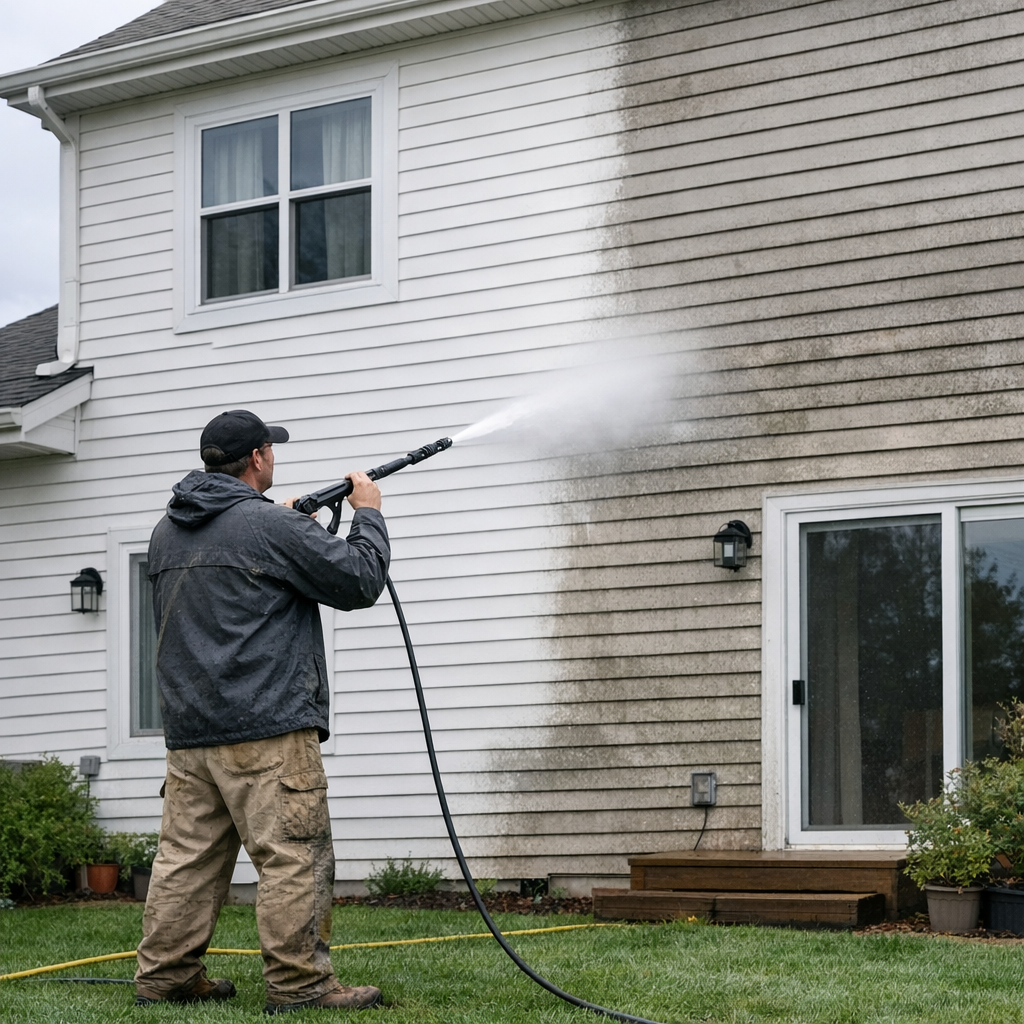
Why Chicago winters make this more urgent than you think
A Chicago driveway looks fine. Until you see the neighbour's. Then it doesn't.
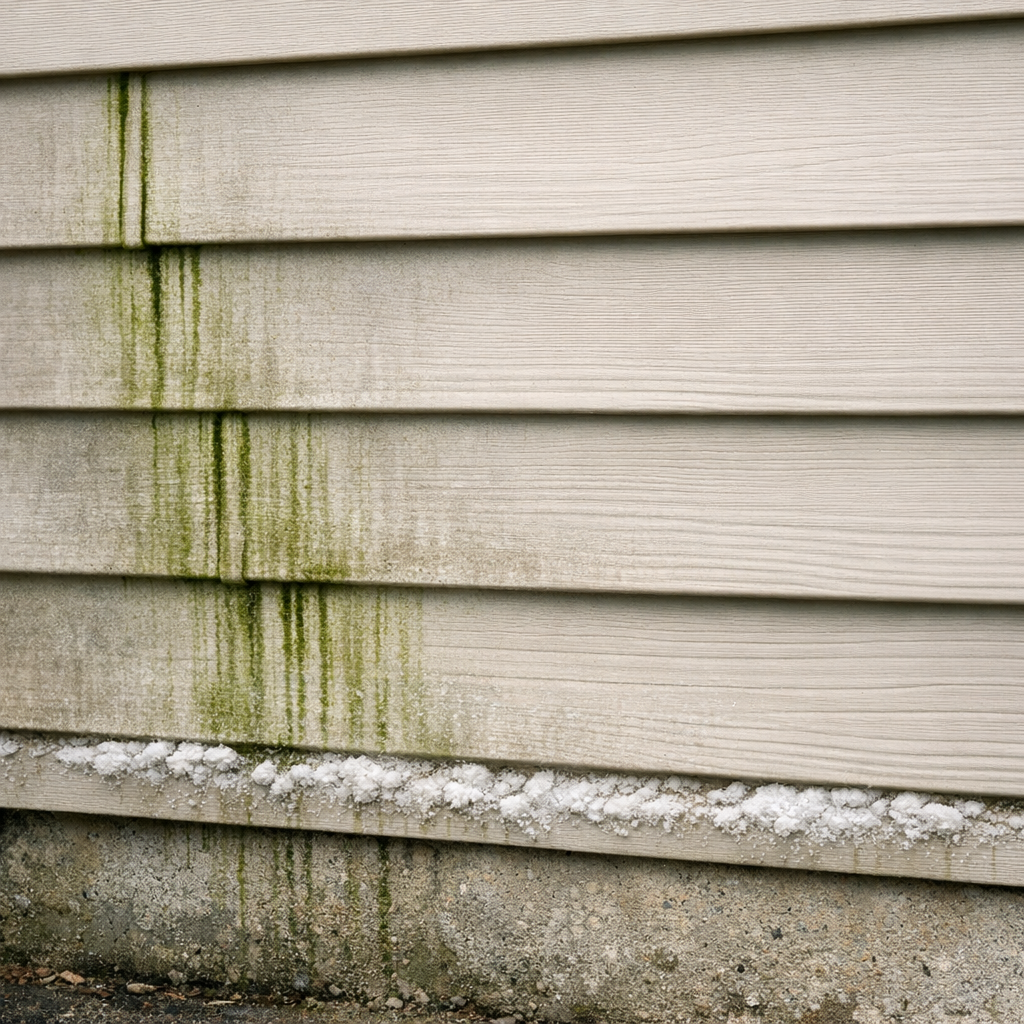
Chicagoland isn't Phoenix. Six months of freeze-thaw cycles push road salt and brine up against your siding, into concrete pores, and along the base of your fences. Humidity runs high enough in spring that algae and mold take hold fast, especially on north-facing walls that don't get direct sun for most of the year.
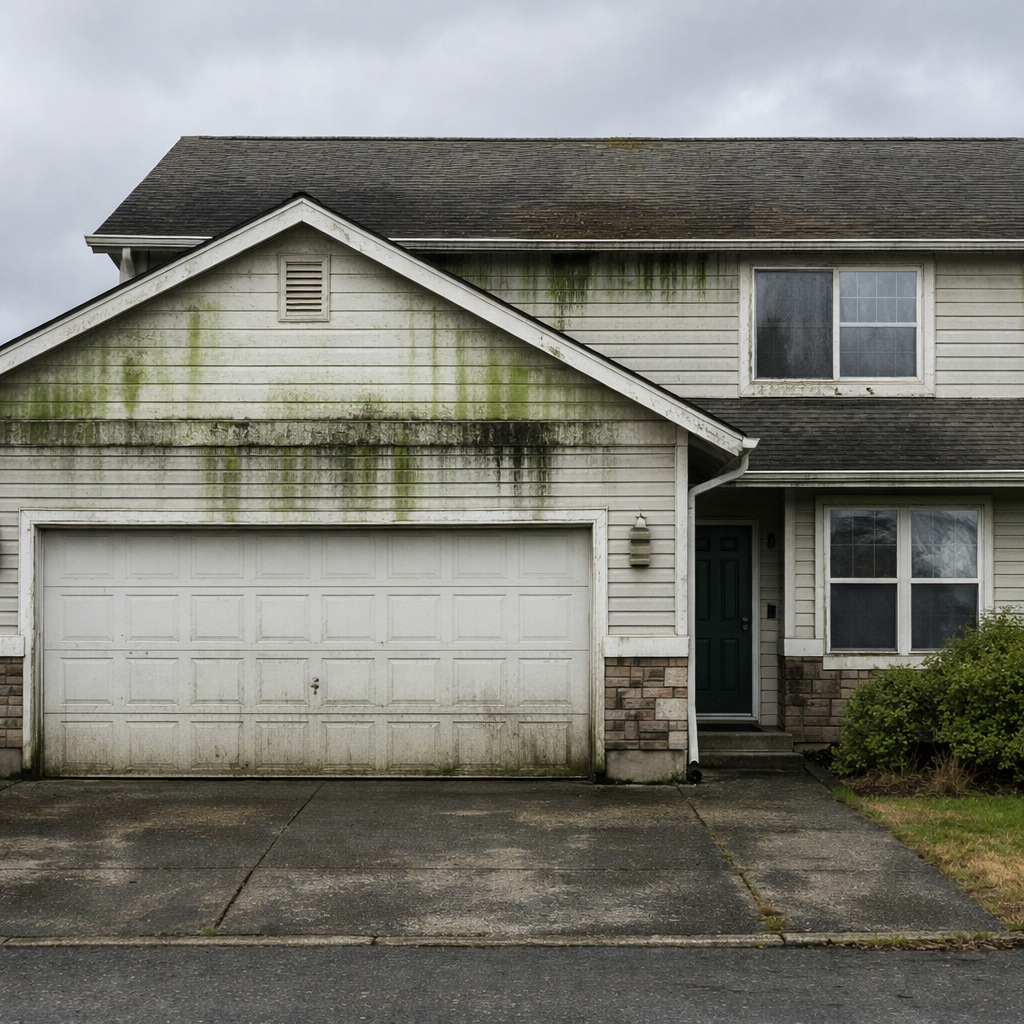
The grime that builds up over a Chicago winter isn't just cosmetic. It's also not the kind of thing you fix with a garden hose and some determination. We know because people try. Road salt is corrosive. Mold spores eat into wood surfaces if you let them sit through a second season. Algae on concrete gradually breaks down the surface, accelerating spalling. A house that looks reasonable in October can look noticeably worse by April.
We wash houses across Naperville, Arlington Heights, Schaumburg, Wheaton, and the rest of the north and northwest suburbs every spring. The difference in condition between a house washed annually and one that skips two years is visible from the street.
How often to pressure wash each surface
Different surfaces need different schedules. Concrete driveways take a beating from cars and salt. Siding is more protected but still picks up mold and exhaust residue. Here's what actually works (and yes, we're about to spend a whole table on your driveway schedule. You're welcome):
| Surface | How Often |
|---|---|
| Vinyl or aluminum siding | Once a year |
| Brick or stucco exterior | Every 1 to 2 years |
| Concrete driveway | 1 to 2 times per year |
| Wood or composite deck | Once a year |
| Fence | Every 1 to 2 years |
| Walkways and sidewalks | Once a year |
One thing that matters more than the calendar: shade. A north-facing wall in a wooded lot in Lisle can develop mold in eight months (the kind that looks almost decorative until you realise it's eating the surface). The same wall on a south-facing house in Bolingbrook might go fourteen months without an issue. If you're unsure, the warning signs in the next section are more reliable than any schedule.
The best time of year to pressure wash your house in Chicagoland
April through early May is the right window for a spring wash. Temperatures are consistently above 40°F, the last hard freeze has passed, and you're clearing six months of winter buildup before mold season starts. Washing in March risks a freeze afterward. Water in concrete pores can expand and cause spalling. March in Chicagoland is not your friend in this department.
September through mid-October is the second-best window. You're removing summer pollen and grime before winter. Good time to clean a deck before you cover it, or clear a driveway before road salt season starts again. The downside: mold has all winter to re-establish, so spring is the more effective primary wash.
What to avoid: washing in summer heat isn't dangerous, but it's less effective. Cleaning solution dries faster on hot surfaces before it can penetrate mold and algae. We still do summer washes, but adjust timing. Early morning when possible.
Don't wash when temps are below 40°F. Water left in surface pores can freeze overnight and crack concrete or cause spalling in brick. We mention this every spring and someone still calls us in February.
Signs your house needs washing now, regardless of schedule
Don't wait for the calendar if you see any of these:
- Black or green streaks running down siding. That's mold and algae moving with rainwater.
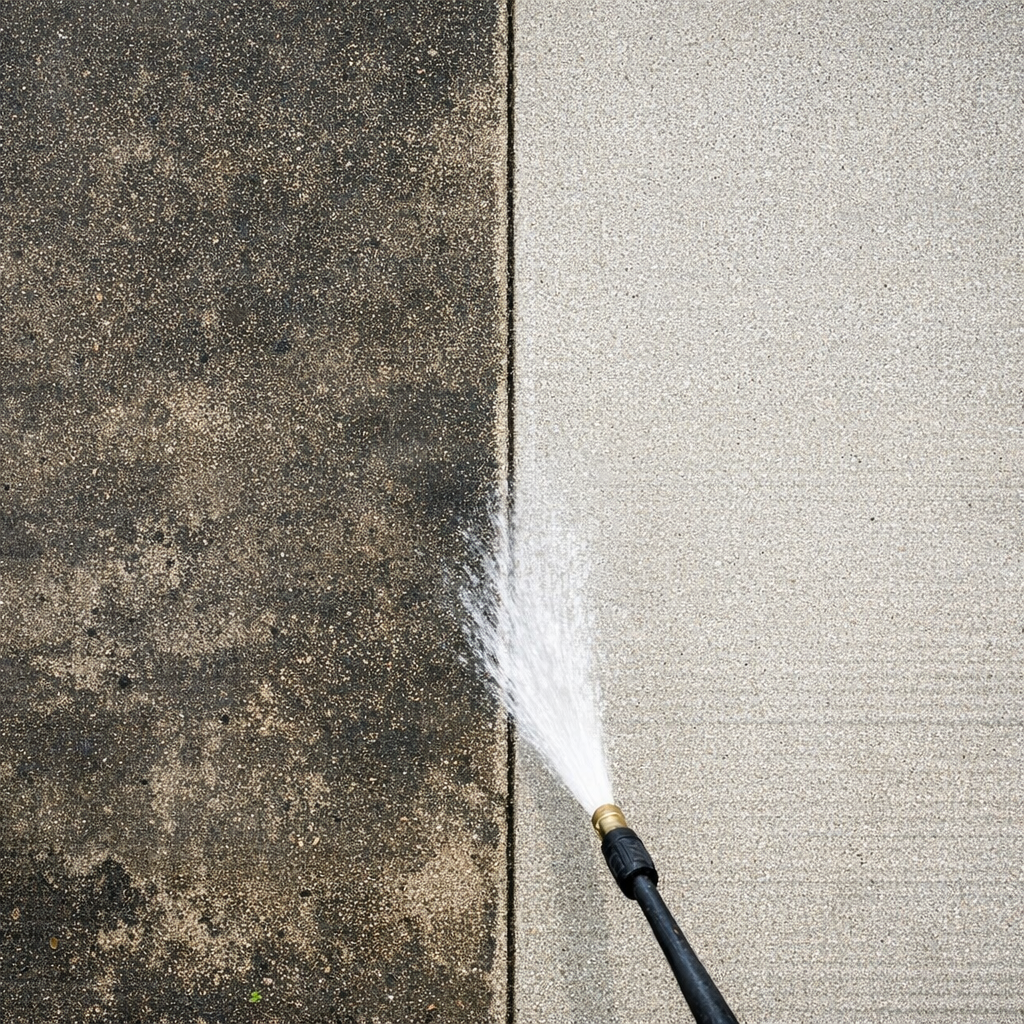
- Your driveway looks a shade darker than it used to, even on a dry day
- A deck or walkway that's slippery when wet. Algae film, not moisture alone.
- White chalky residue near the roofline or above windows. That's efflorescence, salt drawing out of brick.
- A clear clean/dirty line where an awning or overhang blocked rain, leaving the exposed area visibly grimier
- Your neighbors' houses look noticeably cleaner than yours after a spring wash
Any one of those means the buildup is already working against your surfaces. It's not just aesthetics at that point. It's about stopping ongoing damage. Also: your neighbours have definitely noticed.
Soft washing vs. pressure washing: which one does your house actually need
Most homeowners use “pressure washing” to describe any exterior cleaning. The method matters more than the name, and using the wrong one on the wrong surface causes damage that costs more to fix than the cleaning would have.
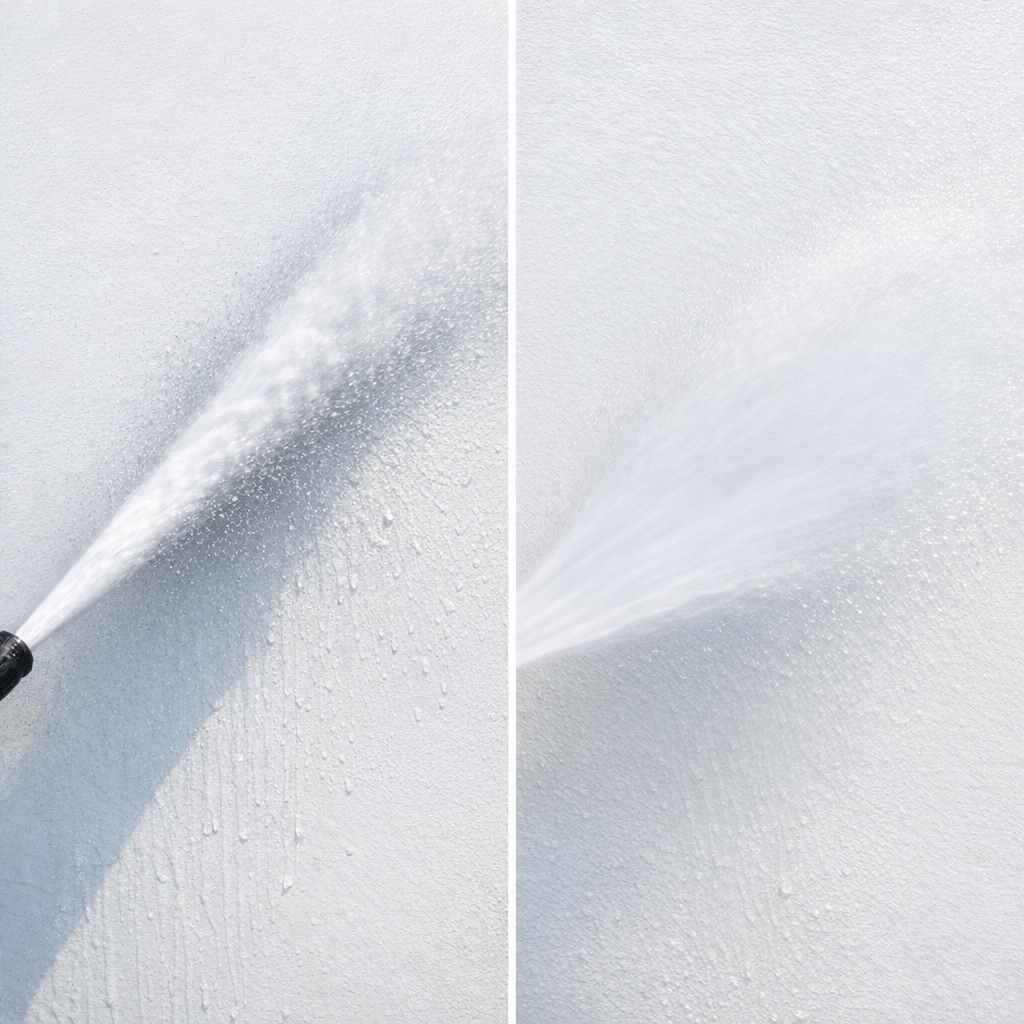
Here's a direct opinion: most residential pressure washing companies in Chicagoland use high pressure on vinyl siding because it's faster. It's the wrong method. High pressure (2,000 to 4,000 PSI) on vinyl can force water behind panels, crack older material, and void manufacturer warranties. The shortcuts show up two years later when siding starts warping, or mold comes back in eight weeks because the roots were never killed. Just the surface was blasted (which feels productive right up until it isn't). The Vinyl Siding Institute recommends soft washing specifically for this reason.
Pressure Washing
High water pressure (2,000 to 4,000 PSI) strips dirt mechanically off hard surfaces.
Right for:
- Concrete driveways
- Sidewalks and walkways
- Brick patios
- Pool surrounds
Soft Washing
Low pressure (300 to 500 PSI) plus a biodegradable solution that kills mold and algae at the root. The solution does the work; the pressure just rinses.
Right for:
- Vinyl and aluminum siding
- Painted wood surfaces
- Stucco and EIFS
- Fences and wood decks
When we quote a house wash in Chicagoland, we're almost always soft washing the siding and pressure washing the driveway in the same visit. They're different processes with different equipment. Not just a pressure adjustment on the same wand.
What happens if you skip a year (or two)
A driveway that hasn't been washed in three years doesn't just look dirty. It looks like it's auditioning for a nature documentary.
You won't see immediate damage. That's what makes it easy to defer. But skipping two or three years has compounding effects:
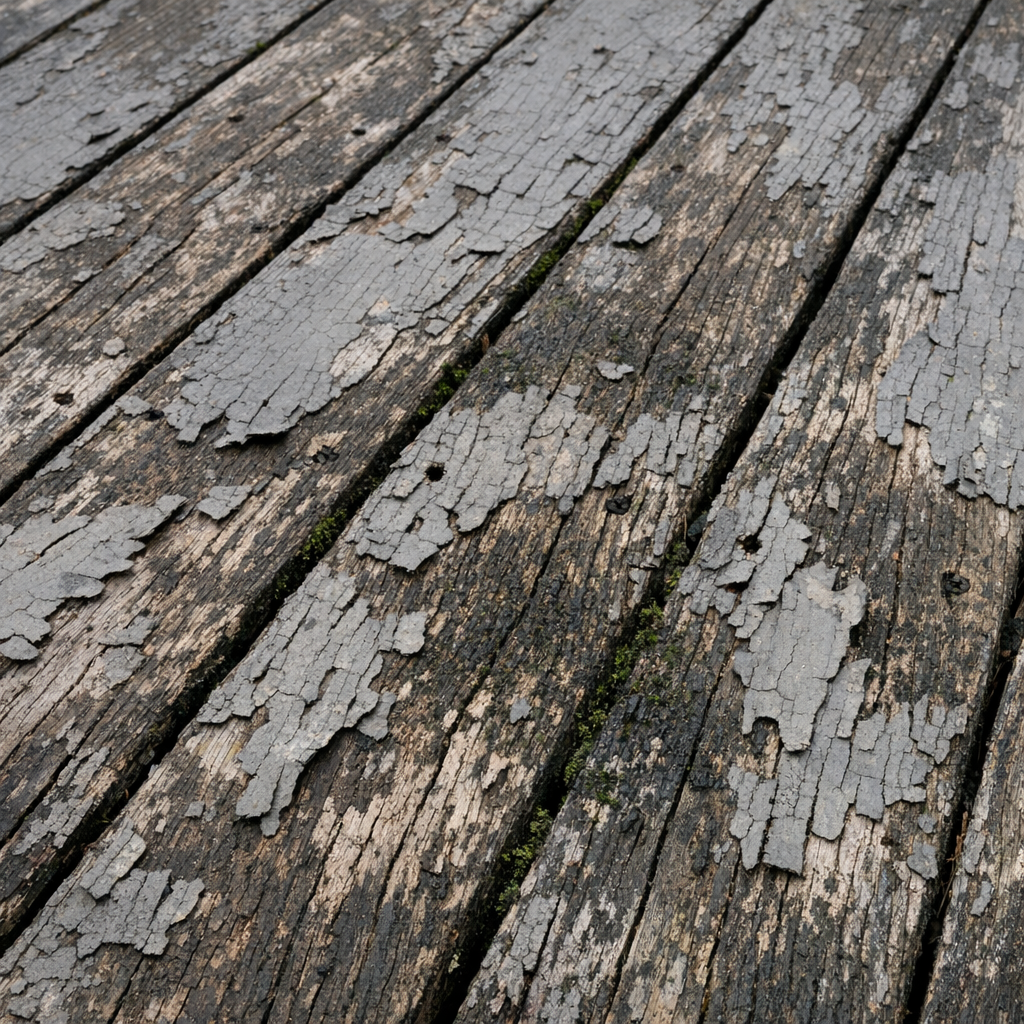
- Mold and mildew penetrate wood grain. At that point you're looking at sanding or replacement, not just cleaning.
- Road salt left on concrete for multiple seasons contributes to pitting and surface breakdown
- Algae under deck paint lifts it from underneath, so you end up refinishing earlier than you would have.
- Paint on wood siding fades 30 to 40% faster when coated in grime that traps UV instead of reflecting it.
The job also takes longer. A house washed annually takes 3 to 4 hours. One that's gone three or four years takes 5 to 6 hours, sometimes more, and still shows residual staining in some areas that a single pass won't fully lift.
Skipping one year saves $200 to $375. Skipping two or three means paying for a longer job, dealing with mold that's penetrated surfaces, and potentially repainting sooner. The math on deferred maintenance is bad. An annual wash is the cheapest exterior maintenance a homeowner does, and the University of Illinois Extension backs that up.
Sam and Michael did a free wash for a neighbor in Elk Grove Village who had just gotten heart surgery. No charge, no ask. People in the neighborhood noticed. Jobs followed. That's still how most of their work comes in. We show up, we do the job, and we don't take bad shifts. That's the whole business model.
When not to hire a pressure washing company
A few situations where you should wait, or where pressure washing won't help. And yes, we're aware this is the part of the article where we talk ourselves out of jobs:
Freshly painted within 60 to 90 days
New paint needs time to cure. High pressure before that can lift edges and cause premature peeling, especially on wood surfaces.
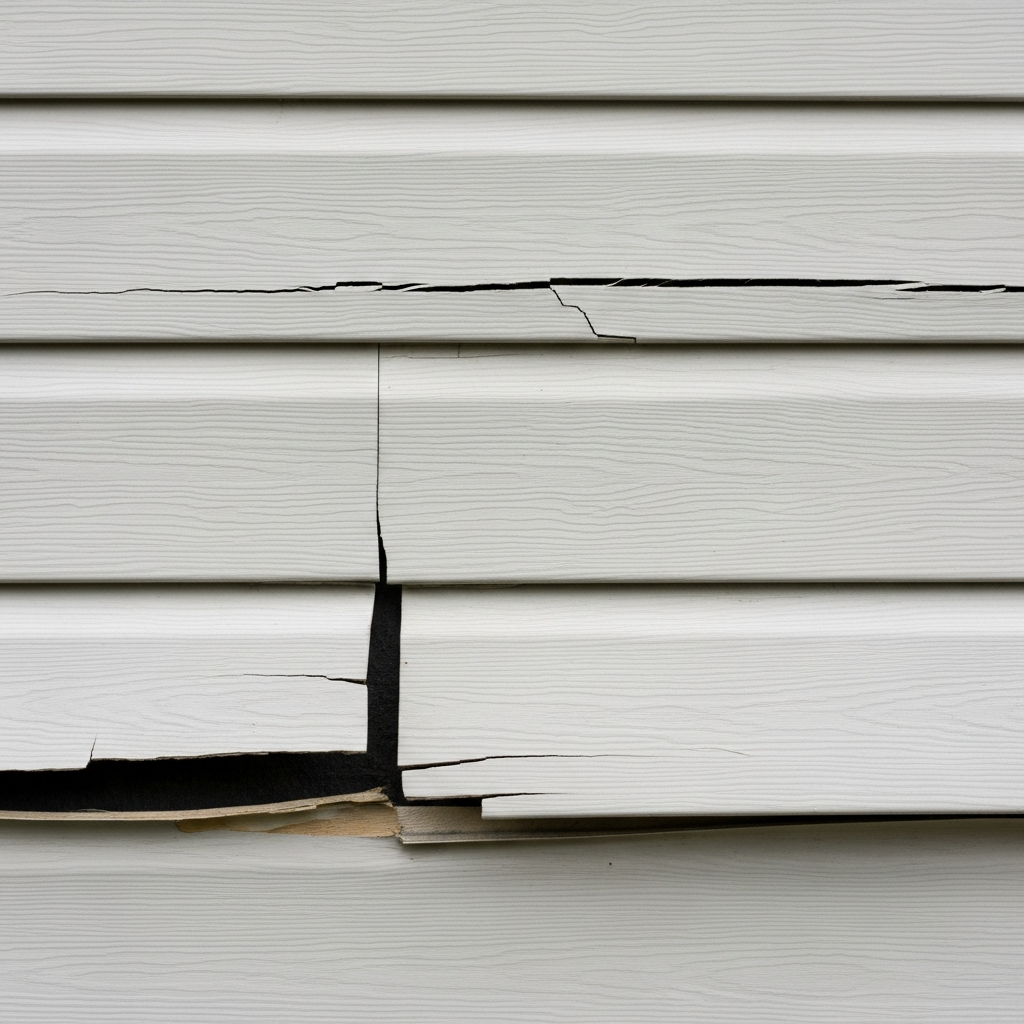
Cracked or damaged siding
Pressure washing won't fix cracks. It'll force water into them and behind the panels. Get the damage repaired first, then wash.
Older brick with failing mortar
If you can see mortar crumbling between bricks, even low-pressure washing can accelerate the damage. Tuckpointing comes first. The EPA also notes that cleaning runoff from deteriorating surfaces can introduce contaminants into storm drains. Another reason to address structural issues before washing.
Roofs with lifted or missing shingles
We don't wash roofs, and you should be cautious of companies that do without a full inspection first. A damaged roof plus water pressure is a leak waiting to happen.
If something on your house isn't ready to be washed, we'll say so before we start. We'd rather lose the job.
Frequently asked questions

How often should you pressure wash your house?+
Most homes need pressure washing once a year. In Chicagoland, spring is the standard window. After winter salt and grime accumulate, do it before summer heat sets in. Concrete driveways with heavy vehicle use can benefit from a second wash in early fall.
What is the best time of year to pressure wash your house?+
April through early May is the best window for Chicagoland homes. Temperatures are consistently above 40°F, the last hard freeze has passed, and you're clearing six months of winter buildup before mold season peaks.
What is soft washing a house?+
Soft washing uses low water pressure (300 to 500 PSI) combined with a biodegradable cleaning solution that kills mold, mildew, and algae at the root. It's the right method for siding, painted wood, and stucco: surfaces that high-pressure washing would damage.
How long does a house wash take?+
A 2,000 to 2,500 sq ft home takes 3 to 4 hours for a full wash including siding, driveway, and walkways. Homes that haven't been washed in several years take 5 to 6 hours because of heavier buildup.
Is pressure washing bad for vinyl siding?+
High-pressure washing can force water behind vinyl panels, crack older material, or strip paint. The correct method for siding is soft washing. Driveways and concrete get pressure washed; siding does not.
How much does pressure washing a house cost in Chicagoland?+
A full siding wash runs $200 to $375 for most homes depending on size. A driveway runs $100 to $175. A combined package covering siding, driveway, and walkways typically runs $300 to $525. Call or text (312) 488-9033 for a free quote.
How do you know if your house needs pressure washing?+
Black or green streaks on siding, a driveway that looks permanently gray, a slippery deck underfoot, or white chalky residue near the roofline. Any of these mean your house needs washing now.
Can I pressure wash my house in the fall?+
Yes. September through mid-October works. You're clearing summer pollen and grime before winter. The downside is mold can re-establish during wet fall months. Spring is still the better primary wash because you're addressing six months of accumulated winter damage.
Sources referenced in this article
Related from Power Play
Ready to actually book it this weekend?
We're not saving lives. We're cleaning driveways. But a clean driveway on a Saturday morning does something for a person. Free quote, same-day response. Two guys, no crews.
Sam
Co-owner, Power Play Pressure Washing
Sam started Power Play with his teammate Michael Verni in 2024. They grew up playing hockey together for the Chicago Blues in Bensenville. He's been on every job since day one across 200+ properties in the north and northwest suburbs. If you book with Power Play, Sam and Michael show up.